
MCP in 2026: Why AI Agents Are Becoming Production Infrastructure
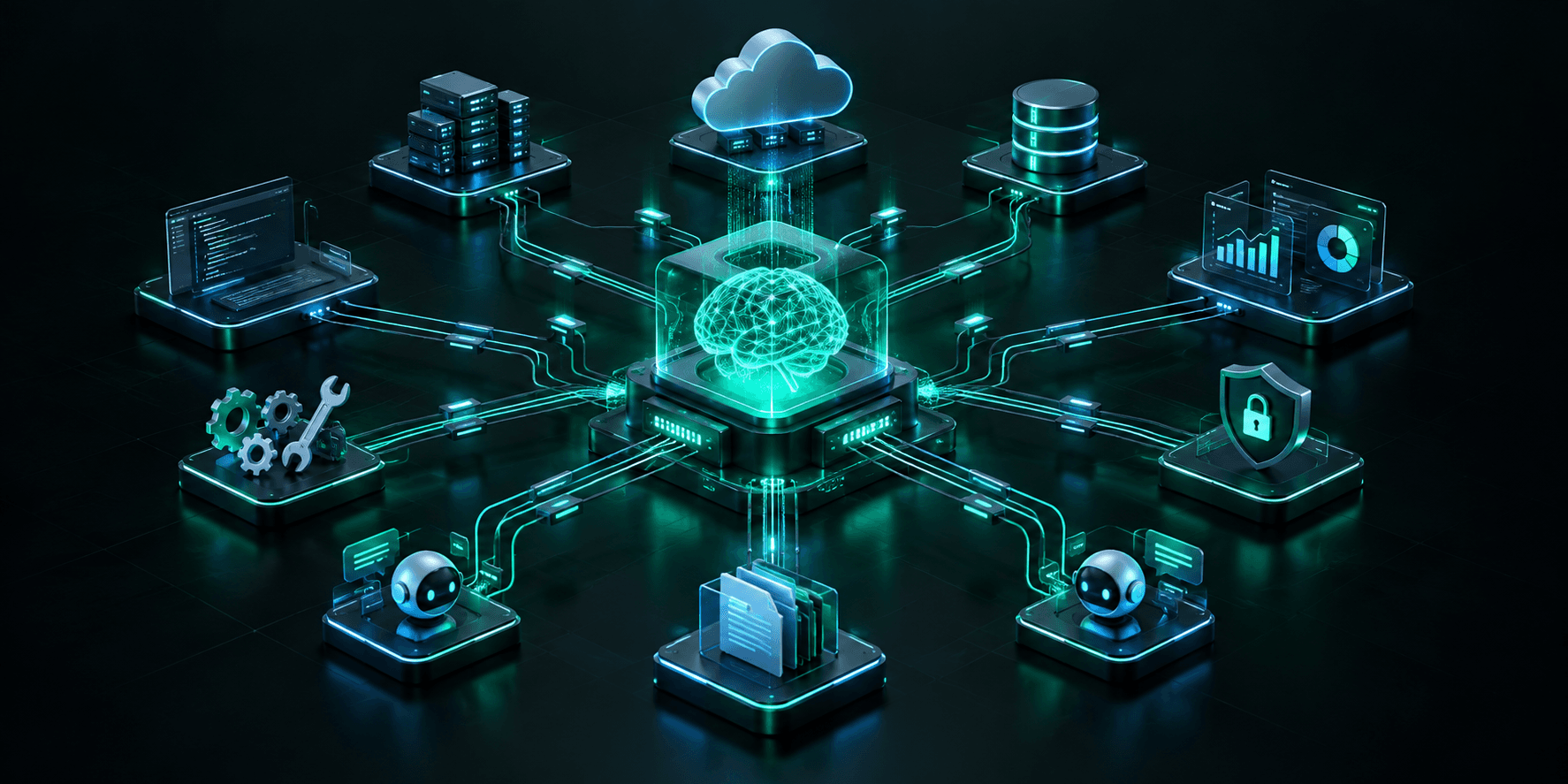
AI agents are growing up
For the last couple of years, building an AI assistant often meant connecting a language model to a few APIs, adding some prompts, and hoping the integrations stayed manageable.
That approach works for demos.
It gets much harder when you move into production.
Real AI products need to work with databases, CRMs, internal tools, file systems, calendars, business APIs, authentication layers and sometimes dozens of third-party services. Every integration adds another custom connector to maintain.
That is one reason the Model Context Protocol, better known as MCP, has become increasingly important.
MCP gives AI applications a standardized way to discover and interact with tools, data sources and external capabilities. Instead of creating a completely different integration pattern for every model and every service, developers can build around a common protocol.
And in 2026, MCP took an important step toward becoming serious production infrastructure.
What actually changed in MCP during 2026?
The July 2026 MCP specification introduced several changes aimed at making the protocol easier to operate at scale.
One of the biggest is a stateless protocol core.
Earlier implementations could require more session-aware infrastructure. With the newer model, MCP services can fit more naturally into ordinary HTTP architectures, load-balanced environments and cloud deployments.
That might sound like an infrastructure detail, but it matters.
When an AI system moves from ten users to ten thousand users, the architecture behind the agent becomes just as important as the model itself.
The specification also introduced or expanded capabilities around:
- stronger authorization
- header-based routing
- cacheable tool-list responses
- multi-round-trip requests
- protocol extensions
- long-running tasks
- richer application experiences
In other words, MCP is evolving from “a convenient way to connect tools to an LLM” into something closer to an integration layer for agentic software.
Why stateless architecture matters
Imagine an AI support agent that can:
- read customer information from a CRM,
- inspect an order,
- check an invoice,
- search internal documentation,
- create a support ticket,
- send a follow-up message.
Without a common integration layer, every one of those actions may require custom code and different authentication logic.
Now imagine running hundreds of those agents simultaneously.
Infrastructure becomes complicated very quickly.
A stateless MCP architecture makes horizontal scaling simpler because requests do not need to remain tied to one specific server instance.
For engineering teams already working with containers, load balancers, serverless platforms or Kubernetes, this is a much more familiar architecture.
MCP is also becoming more enterprise-friendly
Connecting an AI model to business systems is powerful, but it introduces an obvious question:
What should the agent actually be allowed to access?
An AI assistant that can read documentation is very different from an AI agent that can update customer accounts, issue refunds or trigger infrastructure changes.
That is why authorization is becoming such an important part of the MCP ecosystem.
The 2026 specification includes authorization hardening, while the broader MCP roadmap continues to focus on enterprise readiness.
For businesses, this is essential.
The future of AI agents will not simply depend on how intelligent the models become. It will also depend on whether organizations can control permissions, audit actions and safely connect agents to real operational systems.
The bigger shift: AI is moving from chat to action
Most people first experienced generative AI through a chat box.
Ask a question. Get an answer.
Agentic systems work differently.
They can combine reasoning with tools and take multi-step actions.
A customer-support agent might investigate an issue before responding.
A sales agent might research a company, update a CRM and prepare a follow-up.
A QA agent might analyze test results, identify failures and create a report.
A development agent might inspect a repository, modify code and run tests.
The language model is only one part of that architecture.
The real product also needs:
Model + Context + Tools + Permissions + Workflow + Observability
This is exactly where protocols such as MCP become valuable.
They help separate the intelligence layer from the systems the intelligence needs to use.
What this means for SaaS products
For SaaS founders and product teams, MCP creates an interesting opportunity.
Traditionally, adding AI to a product often meant building one isolated chatbot.
That is changing.
A modern SaaS platform can expose selected capabilities as tools that an AI agent can understand and use.
For example, a project management platform could expose tools such as:
create_task
get_project_status
assign_team_member
search_documents
generate_report
Instead of forcing every AI integration to understand the internal API structure, the platform can expose capabilities in a standardized agent-friendly format.
That could make future integrations faster and easier to maintain.
But MCP does not magically make an agent safe
Standardized connectivity solves only part of the problem.
Production AI systems still need proper engineering controls.
Before allowing an agent to perform important actions, teams should think about:
Authentication and authorization
Every tool should know who is requesting an action and what that user or agent is allowed to do.
Human approval
High-impact actions should not always happen automatically.
Payments, account deletion, infrastructure changes or sensitive communication may require human confirmation.
Logging and observability
Teams need visibility into which tools an agent called, what happened and why a workflow failed.
Rate limiting
Agents can execute actions much faster than humans. APIs should be protected against accidental loops or excessive calls.
Validation
Never assume model-generated tool parameters are automatically correct.
Data privacy
Only expose the minimum amount of information required for the task.
The best AI agent architecture is not the one with the most autonomy.
It is the one with the right level of autonomy.
A practical architecture for an AI agent product
A production-ready setup might look something like this:
User
↓
Web or Mobile Application
↓
AI Agent / Orchestration Layer
↓
MCP Client
↓
MCP Servers
↓
Business Systems
Those business systems might include:
- PostgreSQL
- internal APIs
- CRM platforms
- support systems
- Google Workspace
- analytics tools
- payment services
- company knowledge bases
Around that workflow, you still need authentication, monitoring, evaluation and security controls.
This architecture also makes it easier to replace or upgrade the underlying AI model without rebuilding every integration from scratch.
Should every company start using MCP immediately?
Not necessarily.
If your application has one simple AI feature and only one backend API, adding another protocol layer may create unnecessary complexity.
But MCP becomes much more interesting when your product has:
- multiple external integrations
- AI agents that use several tools
- enterprise customers
- complex workflows
- multiple AI models
- reusable internal capabilities
The question is not:
“Can we add MCP to our product?”
A better question is:
“Will a standardized tool layer make our AI architecture easier to scale and maintain?”
If the answer is yes, it is worth evaluating.
What we are watching next
The MCP roadmap is still evolving, with work continuing around agent communication, scalability, governance and enterprise deployment.
That makes the next phase especially interesting.
AI development is slowly moving away from isolated prompts and toward complete software systems where models collaborate with tools, APIs and workflows.
For developers, this means AI engineering is becoming less about writing the perfect prompt and more about designing reliable systems.
For businesses, it means the useful question is no longer simply:
“Where can we add a chatbot?”
It is becoming:
“Which business workflows can AI safely understand, assist with and eventually execute?”
That is a much bigger opportunity.
Final thoughts
MCP will not replace APIs, databases or traditional backend architecture.
Instead, it can become a bridge between those systems and the growing ecosystem of AI agents.
The 2026 updates are important because they push that bridge closer to what engineering teams expect from production infrastructure: scalability, extensibility and stronger authorization.
The companies that benefit most from AI will probably not be the ones that add the largest number of AI features.
They will be the ones that identify valuable workflows, connect the right tools and build the guardrails required to make those workflows reliable.
And that is where the next generation of AI products is starting to take shape.
About JDNextGen
JDNextGen builds modern digital products, SaaS platforms and AI-powered applications with a focus on practical business outcomes.
If your team is exploring AI agents, intelligent automation or a new SaaS product, we can help turn the idea into a production-ready application.